Late Gothic Carved Walnut Figure of a Crowned Female Saint, Southern Europe, 15th–Early 16th Century
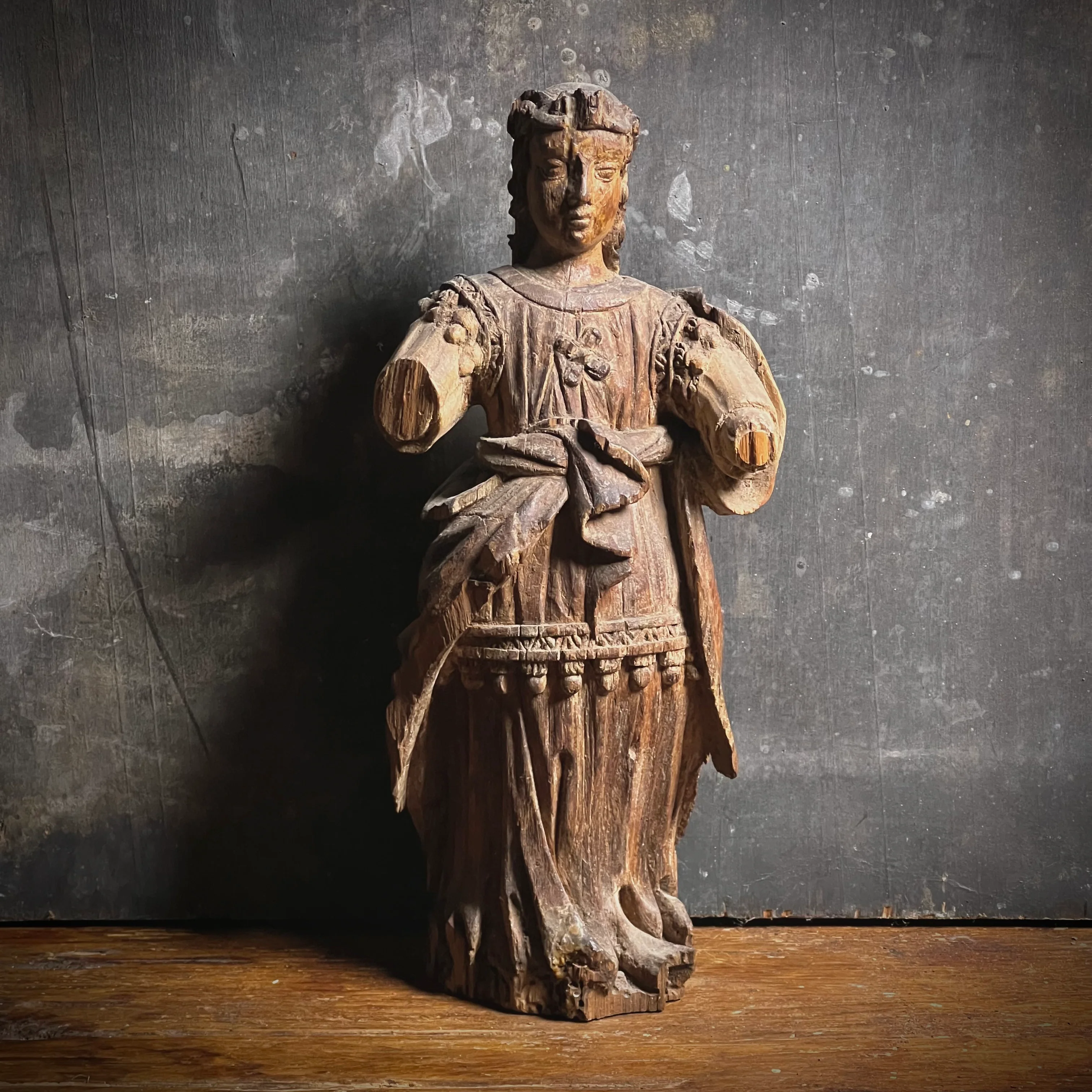
Late Gothic Carved Walnut Figure of a Crowned Female Saint, Southern Europe, 15th–Early 16th Century
A late Gothic carved walnut figure of a crowned female saint, Southern Europe, 15th–early 16th Century.
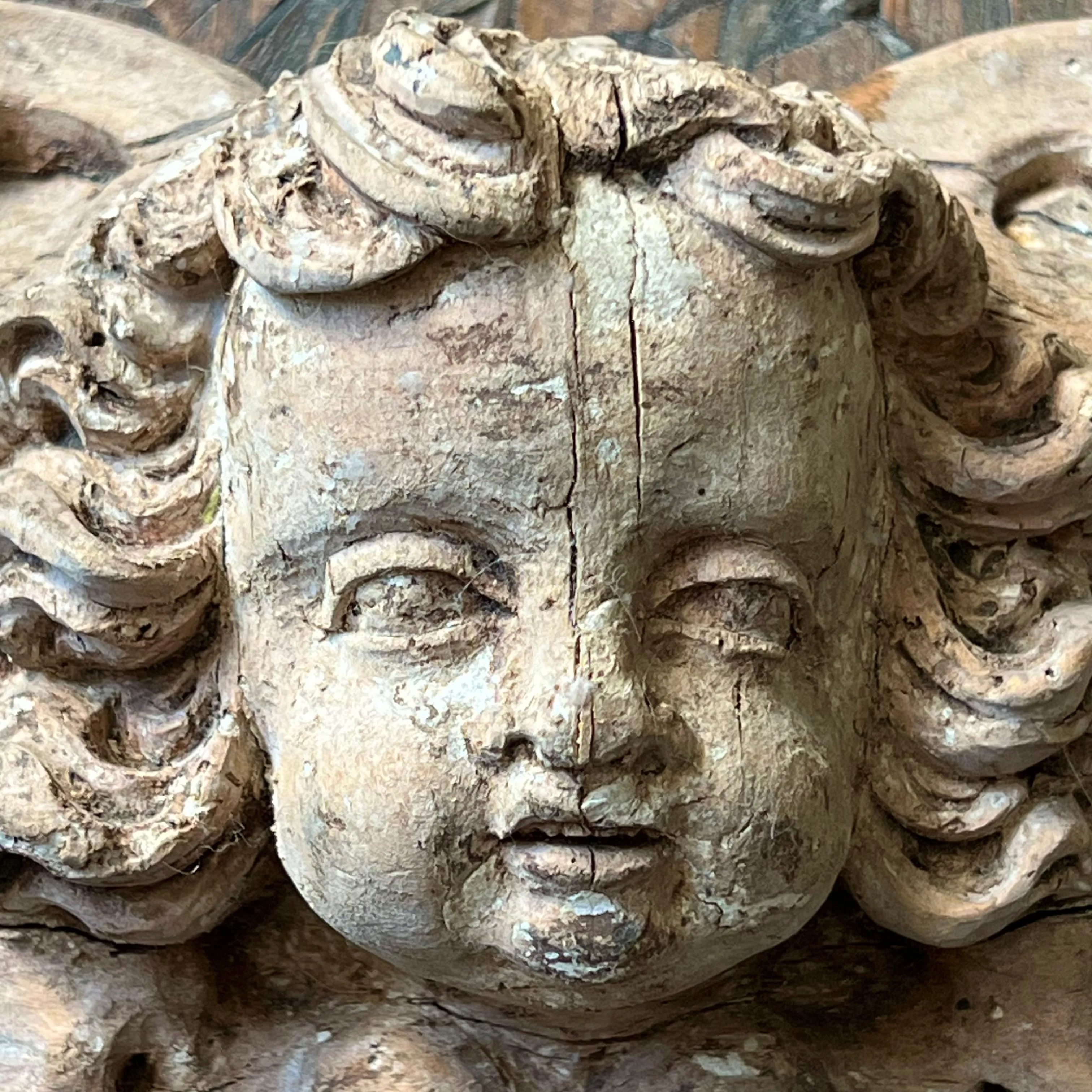
Beautifully carved with a serene, softly modelled face and long curling hair, the figure wears an unusual courtly coronet and a high-waisted gown finished with decorative tasselling. These refined details are characteristic of the late Gothic period, gently transitioning toward early Renaissance taste, and suggest she represents a royal saint — most likely a Crowned Virgin (Mary) or Saint Catherine of Alexandria, both traditionally shown in similar courtly dress.
Likely created for private devotion, she would originally have stood within a small household altarpiece or chapel setting, holding her attributes within her carved arms. The sculpture retains the gentle wear and remnants of an earlier surface expected from a piece of this date, giving her a warm, quiet presence.
A graceful and characterful example of late medieval Southern European carving at the cusp of the Renaissance.
Product Information
Product Information
Shipping & Returns
Shipping & Returns
Description
A late Gothic carved walnut figure of a crowned female saint, Southern Europe, 15th–early 16th Century.
Beautifully carved with a serene, softly modelled face and long curling hair, the figure wears an unusual courtly coronet and a high-waisted gown finished with decorative tasselling. These refined details are characteristic of the late Gothic period, gently transitioning toward early Renaissance taste, and suggest she represents a royal saint — most likely a Crowned Virgin (Mary) or Saint Catherine of Alexandria, both traditionally shown in similar courtly dress.
Likely created for private devotion, she would originally have stood within a small household altarpiece or chapel setting, holding her attributes within her carved arms. The sculpture retains the gentle wear and remnants of an earlier surface expected from a piece of this date, giving her a warm, quiet presence.
A graceful and characterful example of late medieval Southern European carving at the cusp of the Renaissance.